Risk Rarely Travels Alone
Dec 16, 2025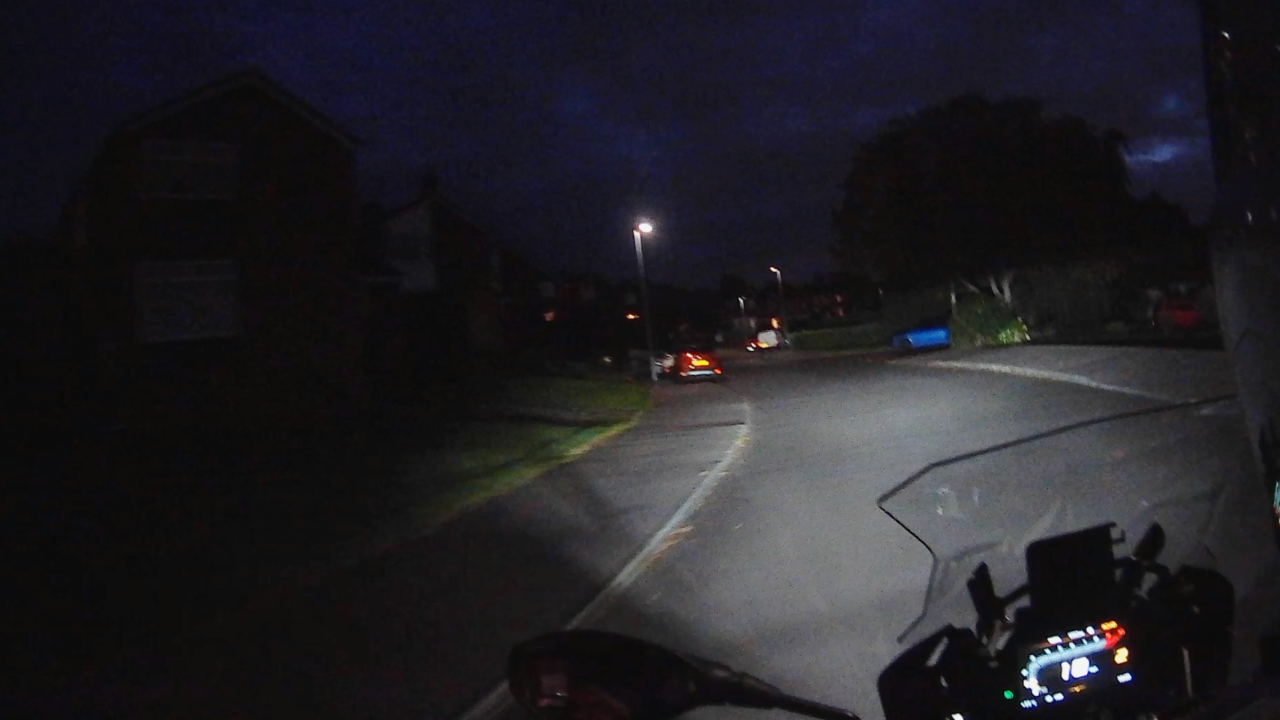
Last Friday morning, I rode my motorbike into Manchester for its annual service.
On the face of it, there was nothing remarkable about the journey. Sixteen miles. Familiar roads. Plenty of time allowed. An early booking, but not an unreasonable one. I’d checked the weather. I knew it would be wet. I knew it would be busy. I knew it was December.
And still, by the time I arrived — soaked through, boots full, attention still buzzing — the ride stayed with me far longer than most do.
Not because it was dramatic.
But because almost everything about it had been predictable.
Dark.
Cold.
Wet.
Friday rush hour.
Heavy traffic.
Motorway speeds.
And road behaviour that I’ve been noticing more since Covid.
None of that was hidden. I noticed it all beforehand. And still, I rode.
That’s what stayed with me.
Looking back, nothing was unexpected
When I reflected on the ride later, what struck me wasn’t that motorcycling can be hazardous — that’s obvious.
It was that no single risk felt decisive.
Each element, taken on its own, felt manageable. I’ve ridden in worse weather. I’m experienced. I left early. Motorways are statistically safer. The bike is capable.
Individually, none of these would have stopped me.
Together, they changed the nature of the system I was operating in.
The margin narrowed.
Recovery options reduced.
Vulnerability increased.
Nothing went wrong. Nothing failed.
But everything felt, well, simply riskier.
That’s when a familiar idea resurfaced — one that rarely gets named explicitly in leadership books and artcles I read, but is almost always present.
Risk stacking.
Risk stacking and the Swiss cheese effect
In high-reliability industries, serious incidents are rarely explained by a single mistake. They happen when multiple small, understandable risks accumulate and interact.
Each decision makes sense locally.
Collectively, the system becomes fragile.
In safety culture and risk management, this pattern is often described as the Swiss cheese effect.
Every system has layers of defence — procedures, experience, controls, professional judgement. Each layer has small gaps. On their own, those gaps don’t matter. The system absorbs them.
But when the gaps align — when the holes in the cheese line up — risk passes straight through in a way it ordinarily wouldn’t.
The layers haven’t failed.
The danger comes from alignment, not collapse.
That’s what risk stacking looks like in practice.
We see this repeatedly when we look back at major failures.
At Piper Alpha, safety systems existed. Procedures were in place. But production pressure plus fatigue plus fragmented communication plus assumptions about what others knew aligned with catastrophic consequences.
And in the Challenger disaster, engineers raised concerns about the O-rings. But schedule pressure plus authority gradients plus reputational stakes meant those concerns didn’t land with the weight they deserved.
In both cases, the issue wasn’t ignorance.
It was risk stacking together with silence.
Adding my own risks up
When I looked back at my own ride, the pattern was uncomfortably clear.
What I’d accepted wasn’t one risk, but a series of additive ones.
Motorcycling plus winter conditions.
Winter conditions plus darkness.
Darkness plus heavy rain.
Heavy rain plus Friday rush-hour traffic.
Rush-hour traffic plus motorway speeds.
Motorway speeds plus changed lane behaviour.
Sustained vigilance plus fatigue.
Each of these felt reasonable in isolation.
Together, they created a system with very little margin.
Nothing dramatic happened.
But I wouldn’t describe it as the most robust and confident ride I’ve ever done.
Why this feels familiar in organisations
Motorcycling is an inherently hazardous activity. Business, in its own way, often is too.
Many organisations exist precisely because they operate where others won’t — under uncertainty, pressure, regulation, and consequence. Professionalism isn’t about avoiding risk. It’s about recognising when risk is accumulating faster than the system can absorb it.
What I keep noticing is that organisational risk rarely shows up as a single issue. It shows up as combinations.
Not problems. Conditions.
Tight deadlines plus reduced headcount.
Change fatigue plus unclear accountability.
High demand plus inexperienced leadership.
Reputational pressure plus silence in meetings.
Growth targets plus cultural erosion.
Compliance reliance plus “we’ve always done it this way”.
Each factor alone is survivable.
Together, they compress margin quietly.
That is risk stacking in organisational life.
The end-of-year effect
I’ve been thinking about the end of the year and what happens to this pattern, does it become more pronounced as the year draws to a close ?
Here are some question to ask ourselves
Are people tired ?
Are we cognitively and emotionally depleted ?
At the same time, is delivery pressure remaining high — final numbers, reputational moments, deadlines that feel immovable ?
Have people been lost out of our organisations ? This year seems to have been a particularly difficult year for some I know.
And in these circumstances.
Nothing dramatic changes.
But behaviour does.
Meetings get quieter.
Questions are softened.
Concerns are delayed.
Energy for challenge drops.
Silence under these conditions isn’t intentional.
It’s understandable.
And that’s what makes this potentially dangerous..
What changed for me on my bike
The interesting thing is that my adjustment next time isn’t about skill.
It is about timing.
Next time, the simplest option is also the most obvious one.
Book the annual service in summer.
Same bike.
Same rider.
Very different risk profile.
That one decision removes several layers of risk before the engine is even running.
And what stays with me now
Leadership, I’m increasingly convinced, works in a similar way.
The most serious failures rarely come from what leaders don’t know. They come from what becomes harder to see — and harder to say — when pressure and fatigue coincide.
Risk rarely announces itself dramatically.
It accumulates quietly, predictably, and often in full, yet invisible, view.
And so.
As the year comes to a close, it may be worth pausing — calmly, without judgement — to reflect.
What risks are currently present in our system?
Which of them feel manageable on their own, but less so together?
And where might a small change in timing, sequencing, or approach remove several layers of risk at once?
In my case, the answer wasn’t riding differently.
It was choosing a different time.
As you and your organisation head towards the end of the year, the question isn’t whether risk exists. It always does.
The question is whether any of it is quietly adding itself together — and whether, like me, there’s one small thing that could be done differently before it does.
Until next time,
Gareth
Stay connected with news and updates!
Join our mailing list to receive the latest news and updates from our team.
Don't worry, your information will not be shared.
We hate SPAM. We will never sell your information, for any reason.