You Don’t Prepare for the Rain When It Starts Raining
Sep 15, 2026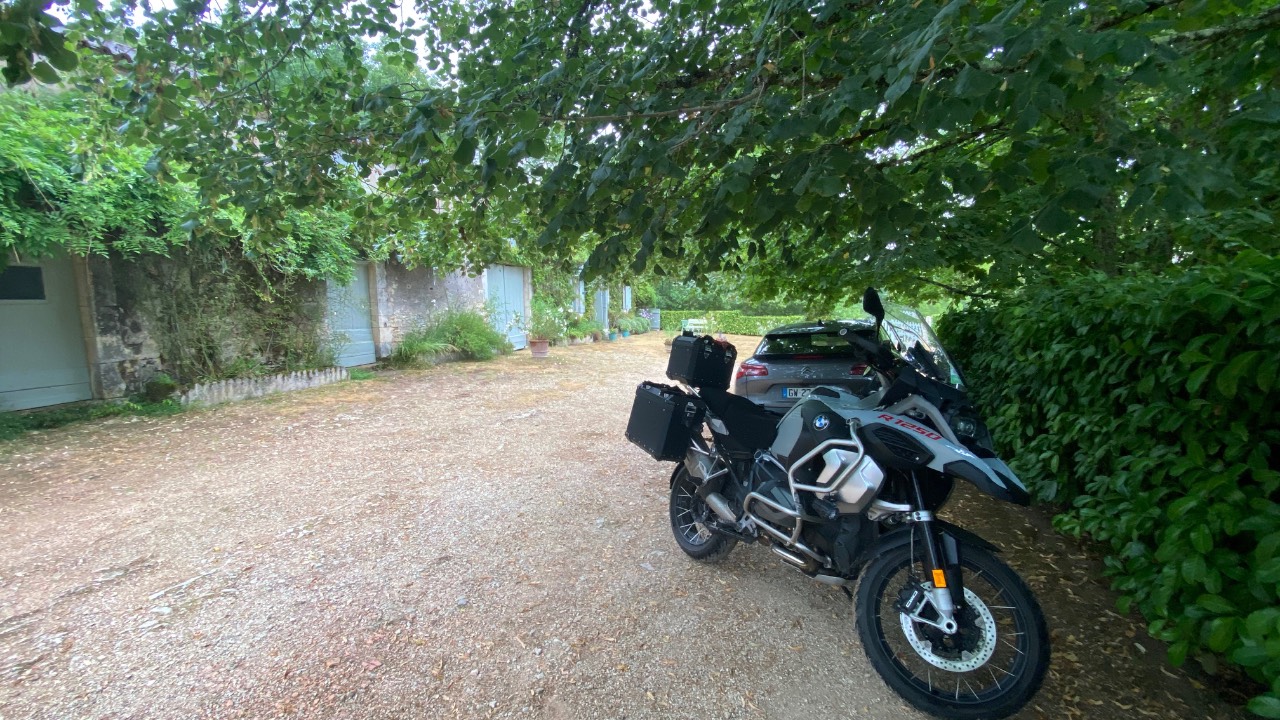
Last year we rode my GS from the North West of England to the small village of Cubjac, in the mediaeval fairytale region of the South of France. It was a big ride, 2800 mile round trip, that’s a tres numbe derrier for sure. When we set off everything looked good. I’d made sure that bike was well prepared, the route was planned and the weather looked promising. Sunny, in fact.
Then we crossed the Channel.
I remember the first few spots of rain appearing on my visor. Nothing particularly concerning. Then a few more. And so we stopped and put our waterproofs on. Just in case. Wiithin a remarkably short period of time, those few drops had turned into a French monsoon.
It lasted for about five hours. Motorway, spray, standing water, reduced visibility and mad traffic. Not quite the glorious ride through France I had envisioned, many months before.
But something interesting happened. It turned out not to really be a problem.
It wasn’t pleasant. It certainly required concentration, and I had to adjust my riding to the conditions. But I was prepared for it.
Waterproofs. Appropriate riding gear. A properly prepared motorcycle. New tyres just fitted. Equipment I trusted. A route I’d planned for. Fuel stops planned. And, perhaps most importantly, enough experience to recognise that the conditions had changed and my riding needed to change with them.
In earlier years, I’m not sure I would have been nearly as well prepared.
And that’s the thing about preparation. Most of it happened long before those first dib dabs appeared on my visor.
The gear had been chosen. The motorcycle had been maintained. Tyres, brakes, fluids and controls had been checked. The route had been considered. The weather had been looked at. Even the rider needed checking: was I fit, rested, alert and ready for what was going to be a long day?
By the time the rain started, those decisions had already been made.
This photograph was taken after we eventually arrived. I was reasonably dry. The motorcycle took days to dry out.
I was reminded of that journey this week while reading an article by Jason Millett, CEO of Mace Construct, about construction productivity.
Mace has analysed data from more than 200 projects, and one of the conclusions it draws is that many of the factors affecting construction productivity are established long before construction actually begins.
Design maturity. Procurement. Workforce stability. Supply-chain involvement. Digital coordination.
That made me pause, because throughout my project career I’ve seen delivery teams inherit the consequences of decisions – good and bad – many made months — sometimes years — before they arrive.
We spend enormous amounts of time trying to improve the performance of projects once they’re underway. It’s just as important to spend rather more time thinking about the conditions we’re creating before they start.
There are things you can control. But. You can’t control the weather
However carefully I’d planned my journey to France, I couldn’t control what happened after we crossed the Channel.
Major projects aren’t so different.
Things will happen. Markets change. People leave. Designs develop. Stakeholders change their minds. Supply chains become constrained. Risks materialise. Political priorities shift. Leadership changes. Something that looked perfectly manageable six months earlier suddenly isn’t.
Good project setup doesn’t prevent those things happening. It changes our ability to deal with them when they do.
I think that’s an important distinction, because sometimes we talk about project setup as though its purpose is to create certainty. But don’t think it is.
Perhaps the purpose of project set up is to create readiness for uncertainty.
Preparation happens before you need it
By the time the rain was hammering against my visor, it was too late to decide whether I should have brought waterproof clothing. It was too late to wonder about the tyres. Too late to think about whether the motorcycle had been properly maintained.
The same applies to a project.
By the time a significant risk materialises, that’s a difficult moment to discover that accountabilities aren’t clear. When a stakeholder challenge becomes serious, that’s a difficult time to discover that nobody has really invested in the relationship. When delivery comes under pressure, that’s not when you want to discover that the leadership team doesn’t really trust one another.
And when the supply chain starts struggling, it’s rather late to begin asking whether it was properly involved and integrated into the project in the first place.
Those things belong much earlier.
That’s why I increasingly think there is an important distinction between authorisation, setup, readiness and mobilisation.
A project can be authorised without being properly set up. It can appear to be set up without genuinely being ready. And it can certainly be mobilised before some of the conditions necessary for successful delivery are in place.
People arrive. Meetings multiply. Plans appear. Reporting begins. Calendars fill up. The project looks busy.
But busy and ready are two very different things.
Readiness doesn’t mean nothing will go wrong
Being prepared didn’t stop the rain in France. It didn’t make those five hours effortless, and it certainly didn’t keep the motorcycle dry. I was exhausted when we arrived in Cubjac.
But being prepared meant that when the conditions changed, I had options.
Perhaps that’s one useful way of thinking about project setup.
The question isn’t: “Have we eliminated all the risks?”
Because we never will.
Perhaps the better question is: “Have we created a project capable of responding when the conditions inevitably change?”
That’s why the Mace research caught my attention. Some of the performance we eventually see during project delivery may have its origins much earlier than we think.
Which leaves me with a question for project and programme leaders: How much of your project’s future performance is being determined by the decisions you’re making before mobilisation?
We eventually arrived safely in France. The preparation had done its job. The bike took considerably longer to recover.
And perhaps that’s the lesson I’ve carried with me since:
When the first drops hit the visor, it’s already too late to start preparing for the rain.
Stay connected with news and updates!
Join our mailing list to receive the latest news and updates from our team.
Don't worry, your information will not be shared.
We hate SPAM. We will never sell your information, for any reason.